How much wind do I need to (learn to) kitesurf?
To shed some light, we’ve compiled all the key info on wind and kitesurfing for you. We’ll gladly create a tailored offer for your first or next kite trip!
Summary
The Beaufort Scale
While browsing our website or learning about kitesurfing in general, you'll often come across the abbreviation "Bft. (Beaufort) when describing wind speeds. This refers to the Beaufort Scale, which was originally developed by the British Admiral Sir Francis Beaufort for maritime navigation to assess the behaviour of waves at sea. Today this scale is widely used by sailors, surfers and kiters to measure wind speed. The scale divides the wind into twelve levels, from calm (0) to hurricane force (12).
For kiters, the fun starts at 4 Beaufort. At this wind speed, the sea is gently moving, a moderate breeze is blowing and the first kitesurfers can hit the water with large kites and boards. With a foil board you can even start kitesurfing at 3 Beaufort. However, this wind range is reserved for experts, as the biggest challenge is getting the kite airborne in such light winds. As a beginner, you should aim for wind speeds of 4-5 Beaufort.
The Beaufort scale
When you browse our website or research kitesurfing in general and it comes to describing wind speeds, you’ll often see the abbreviation “Bft.” (Beaufort). This refers to the Beaufort scale, originally developed by British Admiral Sir Francis Beaufort for seafaring to assess wave behavior at sea.
Today most sailors, surfers, and kitesurfers use this scale to gauge wind speed. It divides wind into twelve forces—from complete calm (0) up to hurricane (12).
For kitesurfers, things get exciting from 4 Beaufort. At this strength the sea is slightly choppy, a moderate breeze is blowing, and the first kiters can head out with a large kite and board. With a foil board you can even go from 3 Beaufort. However, this range is for advanced riders only, as the biggest challenge in such light wind is getting the kite airborne at all. As a beginner, stick to 4–5 Beaufort.
Knots
Wind speed can also be measured in knots instead of Beaufort. A knot is a unit of speed used in maritime contexts and is based on a nautical mile. One knot is equal to 1.852 km/h and exactly one nautical mile.
For example, 7 to 10 knots is equivalent to 3 Beaufort. At around 10 to 11 knots - the boundary between 3 and 4 Beaufort - kitesurfing becomes possible. For beginners, kitesurfing becomes really enjoyable from around 14 knots (4 Beaufort).
At around 30 knots (6 Beaufort), beginners will find it quite challenging. Professional kitesurfers, on the other hand, get excited when the scale goes above 35 knots, as it allows them to set new altitude records. At around 40 knots (8 Bft.), most kitesurfers will leave the water, and at 50 knots (9 Bft.) it becomes unkiteable.
Knots
Wind speed can also be given in knots instead of Beaufort. Knot is a nautical speed unit based on the nautical mile. One knot equals 1.852 km/h and is exactly one nautical mile per hour.
7 to 10 knots correspond to 3 Beaufort. From about 10 to 11 knots—the boundary between 3 and 4 Beaufort—kitesurfing is generally possible. For beginners and newcomers, kitesurfing gets really fun from around 14 knots (4 Bft.).
When the wind reaches 30 knots (6 Bft.), beginners will really struggle at the latest. Pro kiters, on the other hand, are happy when the scale tops 35 knots, as new height records become possible. From about 40 knots (8 Bft.), most kitesurfers leave the water, and at 50 knots (9 Bft.) it’s definitely unkiteable.
Wind Directions
SIDE-SHORE / SIDE-ON-SHORE
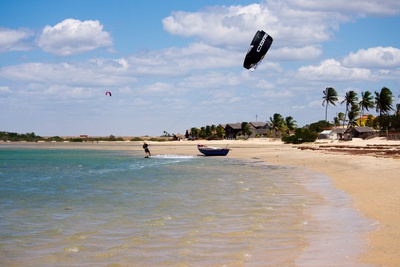
For beginners and intermediate kiters, a steady wind blowing parallel to the shore (side-shore) or diagonally onshore (side-on-shore) is ideal. If something goes wrong during the launch, you won't be pulled straight ashore. Because kitesurfers ride at right angles to the wind direction, they always move away from the shore and then back again with a side or side-on-shore wind. This distribution keeps the water less crowded and if something happens further out, you'll drift parallel to the shore or slowly towards it with a side-on-shore wind.
ONSHORE
Onshore conditions are often associated with shorebreaks, making it more difficult to get started. For kitesurfers, onshore conditions are problematic because of the risk of being pulled uncontrollably over land. The wind and the kiter have to work hard to gain height to get from the shore to the open water. However, the wind is usually very consistent as it can blow freely.
OFFSHORE
Offshore wind is generally not recommended for kitesurfing. Offshore wind comes from the land, has to overcome obstacles and is often very gusty. There is also the risk of drifting, which can happen faster than you think. All it takes is for the wind to die down and you won't be able to get back to shore. It is very difficult, if not impossible, to swim against the wind with kite equipment. You should only kite in an offshore wind if you are no longer a beginner and can ride safely upwind.
Understanding these wind directions will ensure a safer and more enjoyable kitesurfing experience.
Wind directions
Onshore, sideshore, and offshore describe wind direction relative to the coastline and thus characterize surf conditions. There are four main wind directions:
Side-shore / Side-on-shore
For beginners and improvers, a steady wind blowing parallel to the shore (side-shore) or slightly onshore at an angle (side-on-shore) is best. If something goes wrong at launch, you won’t be dragged straight onto land. As kitesurfers ride at right angles to the wind, in side- or side-on-shore they always head away from shore and then back again. This spreads everyone out on the water. If something happens farther out, you won’t drift out to sea but parallel to the beach, or with side-on-shore even slowly toward shore.
Onshore
Onshore conditions often come with shorebreak, which makes getting started much harder. For kiters, onshore is tricky because of the risk of being dragged uncontrollably over land. Wind- and kitesurfers must both gain a lot of upwind to reach open water from the beach. However, the wind flows in freely and is therefore steady.
Offshore
With offshore wind, going out is generally discouraged. Offshore wind comes over land, has to overcome obstacles, and is often very gusty. There’s also a high risk of drifting away faster than you think. It’s enough for the wind to drop and you won’t make it back. You’d have to swim against the wind, which is very hard to nearly impossible with kite gear. Only ride in offshore wind if you’re no longer a beginner and can confidently hold your edge upwind.
Overview
- The best wind speed for beginners is around 12-22 knots (4-5 Beaufort)
- The best wind directions are side shore and side onshore
- Avoid offshore winds
- Take breaks in extreme weather conditions
By the way: We always take the wind conditions and the spot into consideration when choosing our destinations. For a safe and relaxed kitesurfing holiday, do not hesitate to contact us for advice.
Here is a selection of our most popular destinations for beginners, offering ideal conditions for learning to kitesurf:
Overview
- best wind for starting approx. 12–22 knots (4–5 bft)
- best directions are side-shore and side-onshore
- avoid offshore wind
- take breaks in extreme weather conditions
By the way, at our destinations we always consider wind conditions and the spot. For a safe, relaxed kite holiday, feel free to get advice from us.
We’ve put together a selection of our most popular beginner destinations with ideal conditions for learning to kitesurf:
Learn to Kitesurf in Egypt
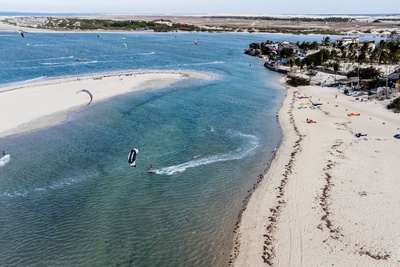
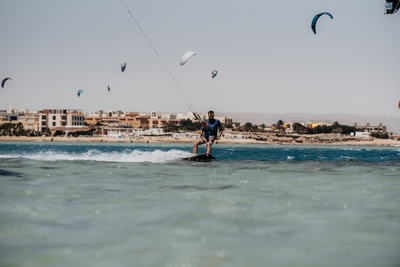
Seahorse Bay in Egypt is the perfect kitesurfing spot for beginners, with a large shallow area right on your doorstep. You can expect stable wind conditions, warm water and small tuition groups, giving you more space on the water and the opportunity to kite at low tide. Between sessions you can relax on the large terrace of our KiteWorldWide Kiteclub and enjoy the view of the lagoon from a deck chair. In addition, you will live exclusively with other kitesurfers and KiteWorldWide guests, with plenty of activities to keep you entertained.
- Family atmosphere at Ibi & Friends Kiteclub Seahorse Bay
- Large flat water lagoon suitable for all skill levels
- Limited spots for more space on the water
- Accommodation on site - from bed to board
- Exclusive to KiteWorldWide
Learn to kitesurf in Egypt
Seahorse Bay in Egypt is the perfect beginner spot, with a large standing-depth area right out front. Expect steady winds, warm water, small lesson groups for more space on the water, and kiting even at low tide. Between sessions, relax in our KiteWorldWide Kiteclub on the large terrace with lagoon views from your sun lounger. You’ll also stay exclusively with other kitesurfers and KiteWorldWide guests, with plenty of activities so there’s never a dull moment.
- Family vibe at Ibi & Friends Kiteclub Seahorse Bay
- Large flat-water lagoon for all levels
- Limited spots for more space on the water
- Stay right on the spot – from bed to board
- Exclusive with KiteWorldWide
Learn to Kitesurfn in Brazil
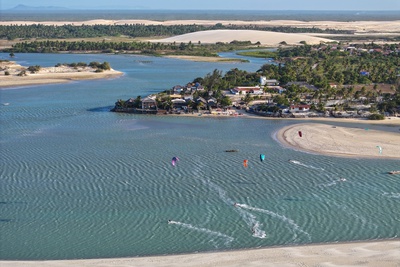
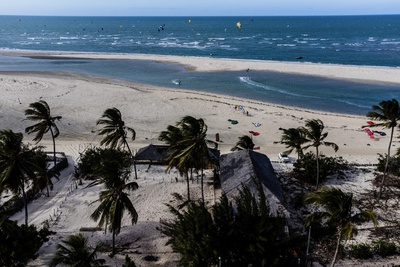
Tatajuba not only sounds beautiful, it is the perfect spot for kitesurfing. This spot boasts the best wind in Brazil, with 99% wind probability and a very long kitesurfing season from July to early February. Tatajuba offers a variety of kitespots: a flat water lagoon that reaches our accommodation Casa de Praia at high tide, endless space on the open sea and fresh water spots just a short buggy ride away. There are also regular downwinders for advanced kiters.
- 99% wind probability
- Huge flat water spot and shallow water area
- Many different kite spots
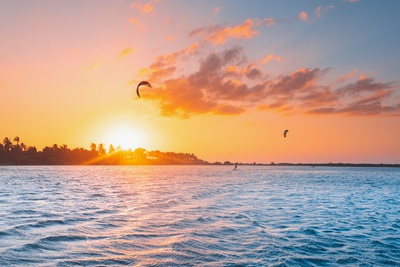
- Kite into the sunset
- Living in nature & right at the spot with pool
Learn to kitesurf in Brazil
Tatajuba doesn’t just sound beautiful—it delivers. Here you’ll find Brazil’s best wind: 99% wind probability and a very long season from July to early February. Multiple spots make Tatajuba unforgettable: a flat-water lagoon that reaches our Casa de Praia at high tide, endless room on the open ocean, and freshwater spots just a short buggy ride away. Regular downwinders are also offered for advanced kiters.
- 99% wind reliability
- large flat-water spot and standing area
- many different kitespots
- kite into the sunset
- stay in green surroundings & right on the spot with pool
Learn to Kitesurf in Sri Lanka
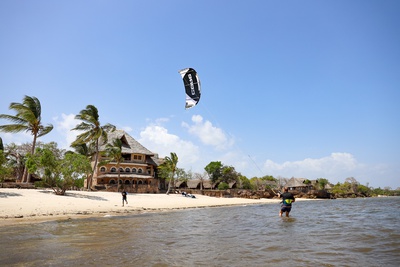
Kalpitiya in Sri Lanka is perfect for kitesurfing beginners, with consistent wind conditions and a large flat water lagoon providing ideal learning conditions. Our KiteWorldWide Lodge is located right on the lagoon and a boat shuttle will take you to the spot. Here you have the perfect combination of excellent wind conditions, a safe learning environment, professional tuition and additional leisure activities, making Kalpitiya an outstanding destination for kitesurfing beginners.
- Huge flat water lagoon
- Professional, exclusive kite centre for KiteWorldWide guests
- Obstruction free water & sandy bottom
- High standard lodge directly on the lagoon
- Delicious full board meals
- Jungle safaris, historic towns and many other activities
Learn to kite in Sri Lanka
Kalpitiya in Sri Lanka is perfect for kitesurf beginners thanks to steady winds and a large flat-water lagoon offering ideal learning conditions. Our KiteWorldWide Lodge sits right on the lagoon and a boat shuttle gets you to the spot stress-free. Here you’ll find a mix of great wind, a safe learning environment, professional coaching, and extra activities—making Kalpitiya an outstanding choice for beginner kiters.
- Huge flat-water lagoon
- Professional in-house kite center exclusively for KiteWorldWide guests
- No obstacles in the water & sandy bottom
- Lodge right on the lagoon with upscale standards
- Delicious full board, plus jungle safaris, historic cities, and more activities