English
Learn kitesurfing: Everything you need to know
Learning to kitesurf – when is the right time?
Many people watch riders from the beach and delay their first course for months. Too dangerous, too hard, too expensive – almost everyone starting out has these thoughts. But the best time is always the same: now.
Kitesurfing isn’t about age, strength, or prior experience. You don’t need board-sport skills, sculpted arms, or surf experience. What you do need: time at the beginning, and the will to stick with it even when progress isn’t instant. The wind is unpredictable – that’s part of it. Accept that, and your first progress will come faster than you think.
A solid base fitness is enough. You should be able to swim and weigh at least 30 kg. There’s no upper limit – neither for weight nor age. Learning at 40, 50, or 60 is no problem as long as you feel fit and are up for something new.
Summary
Learn to kite: What to expect in your kite course
The first and most important step is a course at a certified kite school – to VDWS or IKO standards. In kitesurfing you can greatly reduce risk – provided you learn from the ground up with a licensed instructor. Trying to teach yourself makes it unnecessarily hard and can endanger you and others.
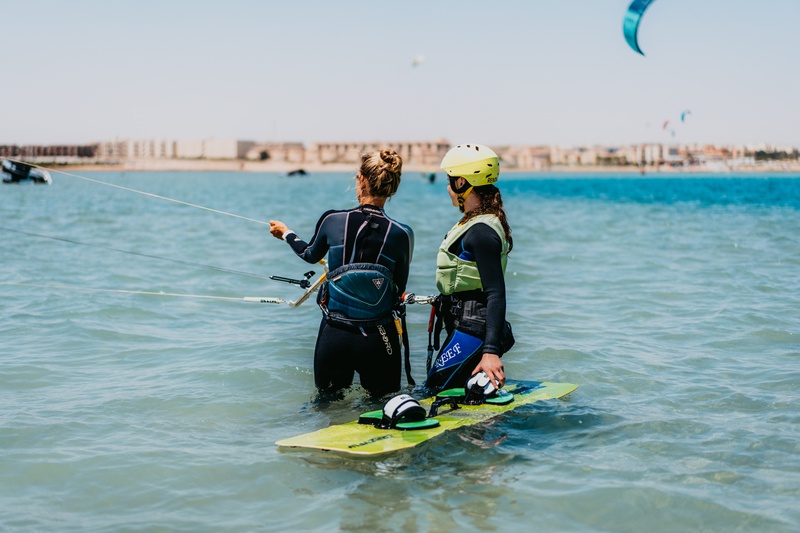
In a kite course you learn in a structured way and in small groups – ideally with a maximum of two students per instructor. The process follows a clear sequence: first theory and wind basics, then flying the kite on land, followed by body drag and finally the waterstart. If you train with VDWS or IKO, you can earn a globally recognized certificate at the end.
How long until you can really kite? That depends a lot on wind conditions, your focus, and the spot quality. With a solid multi-day beginner course and subsequent independent practice, you can learn to ride upwind within two to four weeks of intensive training – returning to where you started. That’s the key milestone.
How much does a kite course cost? Roughly budget 300 to 500 euros for a beginner course, depending on hours and destination. Add accommodation and meals if you learn on a kite holiday – by far the more effective option.
The right spot: Why the kitespot determines your progress
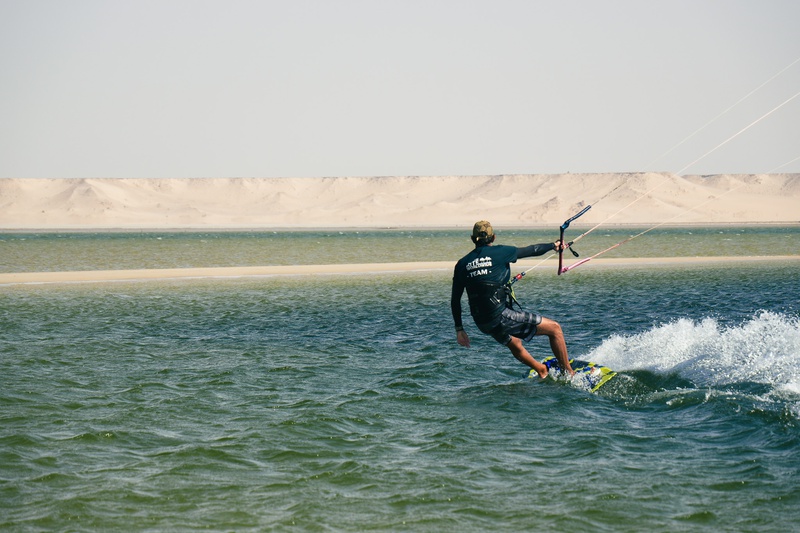
Not every beach is a good place to learn. The spot often influences your progress more than your own talent. A good beginner spot has side wind – so-called sideshore conditions –, no swell, plenty of downwind space, and ideally a shallow standing area where the water is at least knee-deep but not too deep.
Also helpful: fine sandy bottom, no obstacles in the water, reliable rescue service, and a kite school on site. Consistent wind between 12 and 25 knots for several hours daily is what you want – and is standard at the world’s best kitespots.
That’s exactly what separates a good kitespot from a pretty beach. Many holiday destinations look perfect in photos but don’t offer beginners the right wind profile or the necessary infrastructure.
Learn to kitesurf on holiday – the most effective way to get started
If you’re serious about starting kitesurfing, go on a kite holiday. Learning at home is possible but much slower – too many breaks, too many no-wind days, not enough continuity. On a kite holiday you focus fully on kiting, have wind every day, an instructor right at the spot, and learn with like-minded people from the community.
Ideal is a complete package: beginner course plus gear rental afterwards. This lets you deepen what you’ve learned right away without worrying about equipment. Harness, board, and kite are provided. What you need: boardshorts or shorty, a lycra top – and a good mood.
The first key decision after the course: keep at it. Don’t let more than five days pass between sessions until you can reliably ride upwind. After that, the sport is in your body – like riding a bike.
Kitesurfing in summer, autumn, winter, spring – when’s best to learn?
One of the most common questions when learning to kitesurf: When is the best time? The answer depends on the spot. Not every location has reliable wind year-round. That’s why choosing the right season is just as important as choosing the right spot.
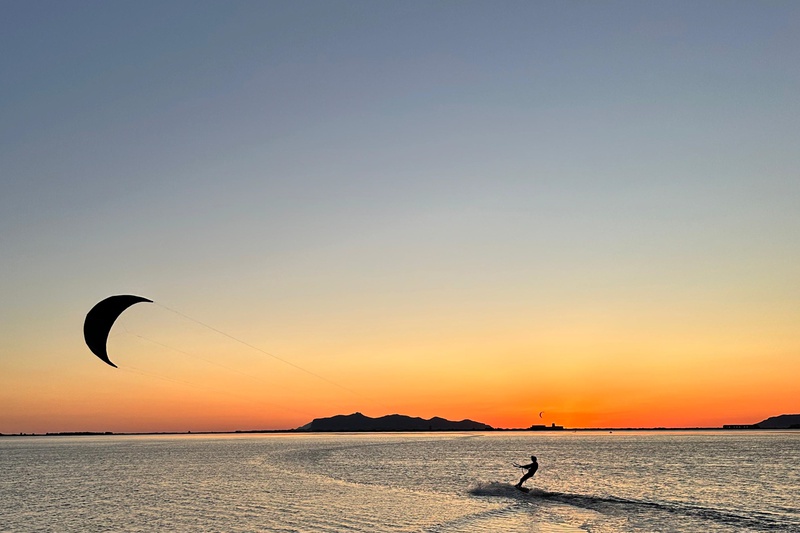
Kitesurfing in summer is ideal at many spots in Greece and Ægypten – steady thermal wind, warm water, long days. Spring kitesurfing at spots like Dakhla or El Gouna often means perfect conditions with fewer people. Autumn kiting shines in Marokko and Sizilien – calmer sessions, pleasant temps. Kiting in March works well if you want an early start in Ægypten or Marokko before the big travel waves.
If you want to kite in winter, look to Dakhla or Brasilien – the wind blows there all year.
The best beginner kitespots – where you should learn to kite
Kitesurfing in Ægypten – Seahorse Bay and El Gouna
Ægypten is among the most reliable beginner destinations worldwide. Seahorse Bay and El Gouna/Makani Beach offer calm flat water, wide sandy beaches, and high wind probability for many months of the year. The thermal wind blows regularly and evenly – ideal for fast progress. Plus short flights from Germany and lodging right at the spot.
Kitesurfing in Marokko – Dakhla
Dakhla is no longer an insider tip. The huge lagoon offers flat water, side wind, and endless space – perfect for beginners who need room to experiment. Kiting in Dakhla means constant wind, desert air, and a uniquely special spot. KiteWorldWide has its own Originals accommodations right on the spot in Dakhla – literally from bed to board.
Kitesurfing in Griechenland – Kos and Rhodos
Kitesurfing in Griechenland means afternoon thermal wind, turquoise water, short travel. Kos offers good conditions for beginners and intermediates alike. On Rhodos, the spot in Theologos is known for its reliable side wind. Both islands have direct flights from many German airports – a clear plus for spontaneous trips.
Kitesurfing in Sizilien – Lo Stagnone
The large lagoon in western Sizilien is a classic European kitespot. Flat, shin- to knee-deep water, no swell, strong wind stats in spring and summer – Lo Stagnone is one of the few European spots truly suited to learning in shallow water.
Kitesurfing on Fuerteventura
The Canary Island is windy year-round – the trade winds make Fuerteventura one of the most reliable kite destinations anywhere. The lagoon at the island’s best-known spot is tide-dependent, but at the right times offers good conditions for learners too.
Kitesurfing in Brasilien – Tatajuba
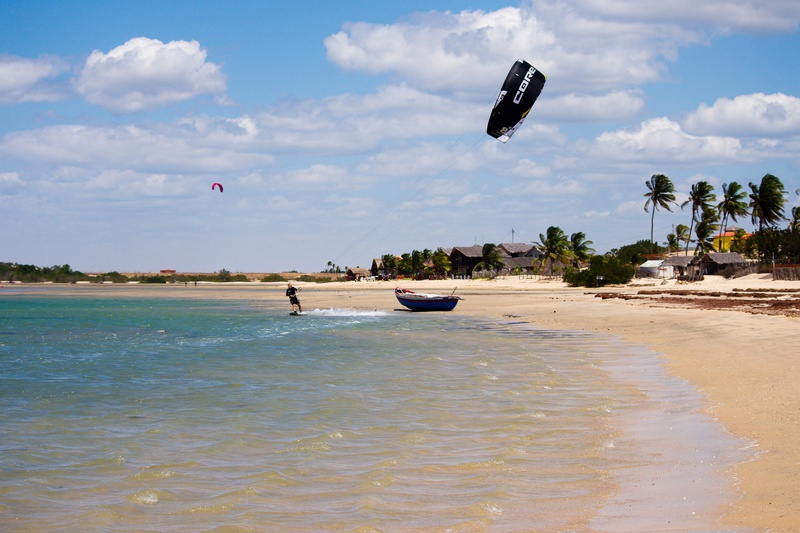
If you want a long-haul trip with kiting: Tatajuba in Brasilien is among the world’s best kitespots. Consistent trade winds, flat water, endless sandy beaches – and an atmosphere you won’t forget. Better for those with basics who are aiming for the next level.
Kitesurfing as a community trip – go solo or with like-minded people?
Many who book a kite trip travel solo – and return with a bunch of new contacts. That’s the nature of it: at the world’s best kitespots, like-minded people meet who all want the same thing. Wind, water, sessions.
If you want to travel as a group – as a couple, with friends, or solo looking for company – KiteWorldWide offers packages designed exactly for that. Accommodation, course, and community in one place. Kite camps with this structure work especially well for those who want to learn and meet people at the same time.
Kitesurfing for women, kitesurfing 40+, kitesurfing for solo travelers – these aren’t niches, but established parts of the community. Once you’ve been to a great kitespot, you’ll see why.
Book your first kite trip – what to look out for
Before you book, it’s worth considering a few points:
Check wind stats. Not every spot is reliable every month. Choose your destination for wind probability – not the cheapest flight.
Beginner or intermediate? If it’s your first time, you need flat water, solid infrastructure, and courses right at the spot. If you already ride, you can consider more demanding spots.
Package or DIY? A kite-specific package with accommodation, course, and gear is almost always best for beginners. You save coordination hassle and know that lodging, spot, and courses fit together.
Plan enough time. At least a week, better two. Wind has a say – and if you’re short on time, you’ll feel pressure. That’s the worst companion for learning.
With KiteWorldWide you can compare destinations, book packages online, and get advice in advance – which spot fits your level, when to travel, and what to expect at each kite camp.