English
Kitesurfing in Brazil: Tatajuba – THE ultimate kitetrip
Kitesurfing in Brazil: Tatajuba – Your Kite Holiday with the Most Reliable Wind Season in the KiteWorldWide Portfolio
A kite trip to Brazil is at the top of many kitesurfers' lists – and for good reason. Nowhere else in our portfolio will you find such a long, consistent wind season as in Tatajuba. Between Jericoacoara and Camocim lies this small village with no paved roads, where strong wind, warm water and a relaxed community feel combine into one of the most intense destinations for kitesurfing you'll experience on your kite holiday.
Key facts at a glance
- Wind season: July to February, 99% wind probability
- Wind strength: 17–23 knots in July, August and February, up to 30 knots and more during high season
- Water temperature: around 28°C, no wetsuit needed
- Two accommodation options right at the spot: Portal do Vento and Casa de Praia
- Getting there: via Fortaleza, approx. 4-hour transfer to Tatajuba
- Sample price: from €579 per person in a double room (Basic Package, sample week)
Summary
Brazil in General: Why the Country Is Unique for Kitesurfers
Brazil is a country every kitesurfer should visit at least once. The north-east coast, particularly the state of Ceará, is known worldwide for its steady trade winds. Places like Cumbuco and Icaraí have long made the region a fixed point on the map for anyone looking for a kite trip with reliable wind.
What many people don't know: just one river mouth further along, away from the better-known spots, lies Tatajuba – a small fishing village that offers the calm you sometimes miss at larger kite destinations. With KiteWorldWide, you get both: the wind conditions Brazil is internationally known for, and a destination not everyone knows about yet. For your kite holiday, that means long sessions, plenty of space on the water, and a village where kitesurfing still feels like a discovery – surrounded by palm trees, fine sand and friendly locals who make this place what it is.
The Kite Spot and the Wind Season: Why Tatajuba Comes Close to a Wind Guarantee
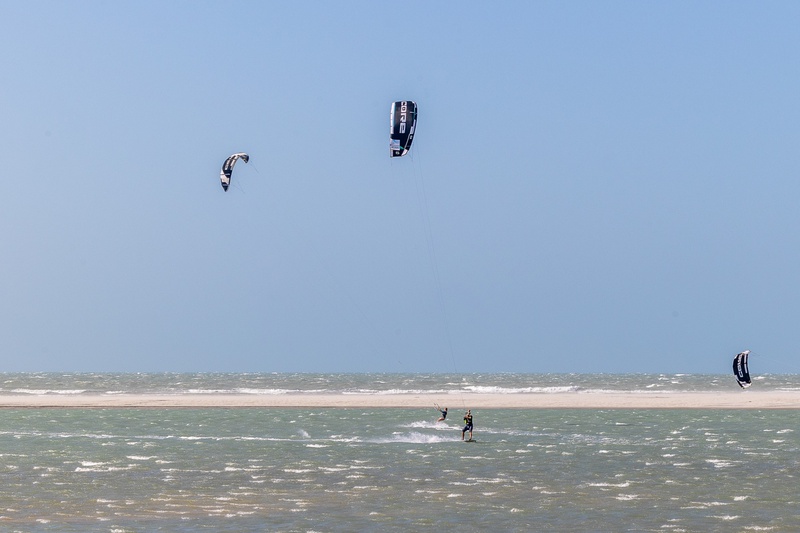
Tatajuba sits directly at a river mouth between Jericoacoara (known locally as Jeri) and Camocim. There are no paved roads here – you walk on fine sand, surrounded by palm trees, deep red sunsets, and what many consider Brazil's strongest wind.
From July to February, a constant side-onshore wind blows in Tatajuba with a 99% wind probability. In July, August and February you can expect 17 to 23 knots, and during high season, 30 knots or more is far from unusual. Within our entire portfolio, this is the longest and most consistent wind season – as close to a wind guarantee as a tour operator can seriously promise.
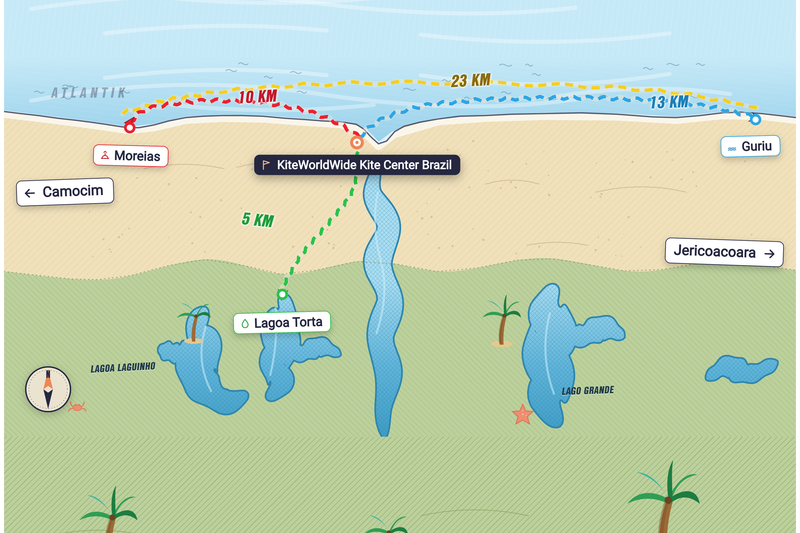
The spot itself is a river mouth: as the tide comes in and out, glassy flat-water areas form that are ideal for freestyle kiting. Right by our Casa de Praia lodge is the Tatajuba River Mouth – at high tide, a large, mostly standing-depth lagoon well suited to both beginners and advanced riders. If you're after more of a challenge, the Tatajuba Wave Spot on the ocean side offers small kicker waves and good cross-shore wind – perfect for wave beginners and experienced kiters alike. About 4 kilometres away, right in the middle of the dunes, you'll also find the freshwater lagoon Lagoa da Torta, which stretches over 16 kilometres and ranks among the region's most beautiful flat-water spots. And then there's the Secret Spot – our instructors will only reveal exactly where once you're on site.
With a water temperature of around 28°C, you can happily leave your wetsuit at home – a lycra rash vest for sun protection is all you need on the water. All courses at our kitesurf school – from your very first lesson to jump coaching for advanced riders – follow VDWS and IKO standards. Learning to kitesurf in Tatajuba is therefore just as safely structured as at our other destinations: with qualified instructors, clear standards, and a spot with enough space for every level.
The Accommodation: Portal do Vento and Casa de Praia
In Tatajuba, you'll stay at one of two KiteWorldWide properties – depending on the style you're after for your kite trip.
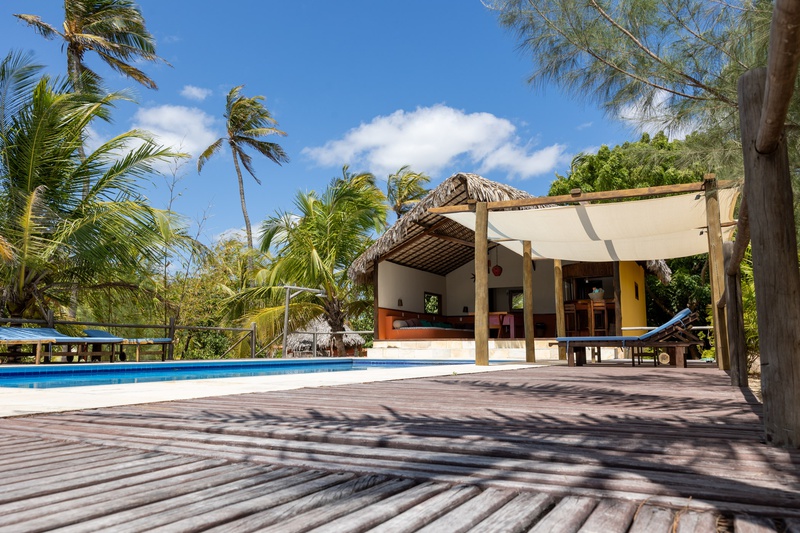
Portal do Vento is our green oasis in the village. Here you can choose between stilt houses (known as palafitas), small bungalows or kite houses, surrounded by palm trees and Brazil's wildlife: small monkeys, hummingbirds and lizards are all part of daily life here. At the shared breakfast buffet and the weekly Brazilian BBQ, you'll meet like-minded people from across our kitesurfing community, and the pool occasionally hosts spontaneous pool parties in the evenings.
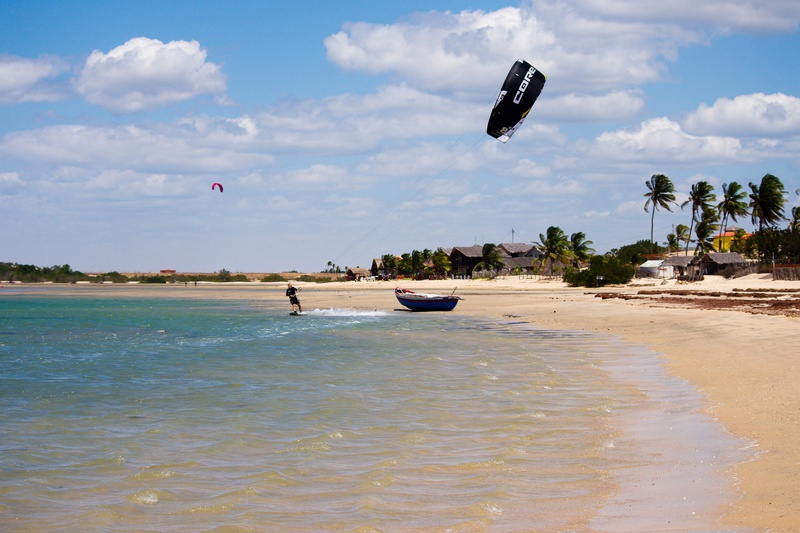
Casa de Praia is our newer property, located right at the kite spot. Every room has its own balcony or terrace, and at high tide it's just a short walk from your bed straight to the water. From the four Sea View rooms, you look out over the lagoon, and a small pool in the outdoor area keeps you cool between sessions.
Both properties share what we consider essential on every kite trip: a generous breakfast buffet with home-baked bread, freshly squeezed juices and tropical fruit, plus a weekly churrasco – the Brazilian take on a BBQ, including the best caipirinhas in the village.
Excursions and Downwinders
If you're travelling to Brazil, you don't have to limit yourself to the spot right outside your door – even though that alone would be enough for a whole kite holiday.
Downwinders are one of the highlights of a kite trip to Tatajuba for many riders. In our sample week, Mondays feature a downwinder to Guriu combined with a beach buggy tour along the shore, while Tuesdays bring a sunset downwinder towards Fazenda Moreira. One downwinder is already included in the Basic Package – provided you can ride upwind safely.
If you need a break from the water, the dunes of Funil offer plenty of variety: hop on a beach buggy to explore the dune landscape, or try your hand at sandboarding. The trip to our Secret Spot also involves a buggy tour through the dunes.
About 45 minutes away lies Jericoacoara, known as Jeri, famous for its relaxed daytime pace and lively nightlife. Just four sandy streets, yet surprisingly many restaurants, guesthouses and small shops – plus plenty to do between kite sessions: learn capoeira on the beach, go sandboarding in the dunes, or take a horse ride along the coast. Camocim, around 25 kilometres in the other direction, shows you the quieter, more village-like side of Brazil, with a market, small shops and everyday life away from tourism.
Brazil Insider: In Conversation with Osvaldo on the Ground
Nobody knows Tatajuba as well as the people who live and work there. We spoke to Osvaldo, our station manager on site, and asked him what makes this place so special to him.
"Tatajuba is the strong wind, the warm water, the calm, the kitesurfing, the simplicity of walking barefoot in the sand and watching the sunset, the good people who live here and make this village such a special place. Sipping cool caipirinhas and eating fresh oysters after a full day of kitesurfing makes it even more perfect."
It's exactly this mix – strong wind by day, relaxed evenings with the community – that brings so many guests back to Tatajuba after their first kite trip.
Frequently Asked Questions About Kite Trips to Brazil
You'll need a valid passport that's still valid for at least 6 months on entry. If you don't hold German citizenship, please check the entry requirements for your home country with the Brazilian embassy beforehand.
Flights to Fortaleza are available with airlines including KLM (via Amsterdam), TAP (via Lisbon), Air France (via Paris) and LATAM (via Madrid), typically ranging from €750 to €1,200 from Germany, Austria and Switzerland. If connecting via Lisbon, allow at least 2 hours to make sure your luggage arrives with you.
Yes. The transfer from Fortaleza with a transfer company takes around 4 hours. If you'd prefer a cheaper option, you can take a bus to Jijoca, Jericoacoara or Camocim and arrange a beach buggy transfer from there – a bit slower, but considerably cheaper.
In Tatajuba, you'll typically pay by cash or credit card.
This depends on your habits. Breakfast and the weekly community BBQ are already included. An açaí and a coconut after your session will cost around €7, and dinner with the community usually comes to €10–15.
Wi-Fi is available at KiteWorldWide accommodation and at the kite school. Brazil uses the European plug system (Type F), so you won't need an adapter.
Alongside your passport, pack sun cream (SPF 30 or 50+, waterproof), after-sun lotion, insect repellent, a beach towel, flip-flops, and lightweight clothing including a pair of long trousers and a jumper for the evenings. A wetsuit isn't necessary, but you should bring a lycra rash vest for sun protection.
Advanced kiters weighing around 80 kg typically use 5 to 9 square metres, with 7 square metres being the most common size. Only in July or late January, when the wind briefly eases, are larger kites of 11 or 12 square metres needed.